Why This Project


Tsisnaasjini' is the Navajo name for Mount Blanca. Also known as the Sacred Mountain of the East, Blanca is one of the four directional mountains that mark the boundaries of the Navajo Nation.
Showing posts with label Blanca Flats. Show all posts

Sunday, December 8, 2013

Abandoned Furniture


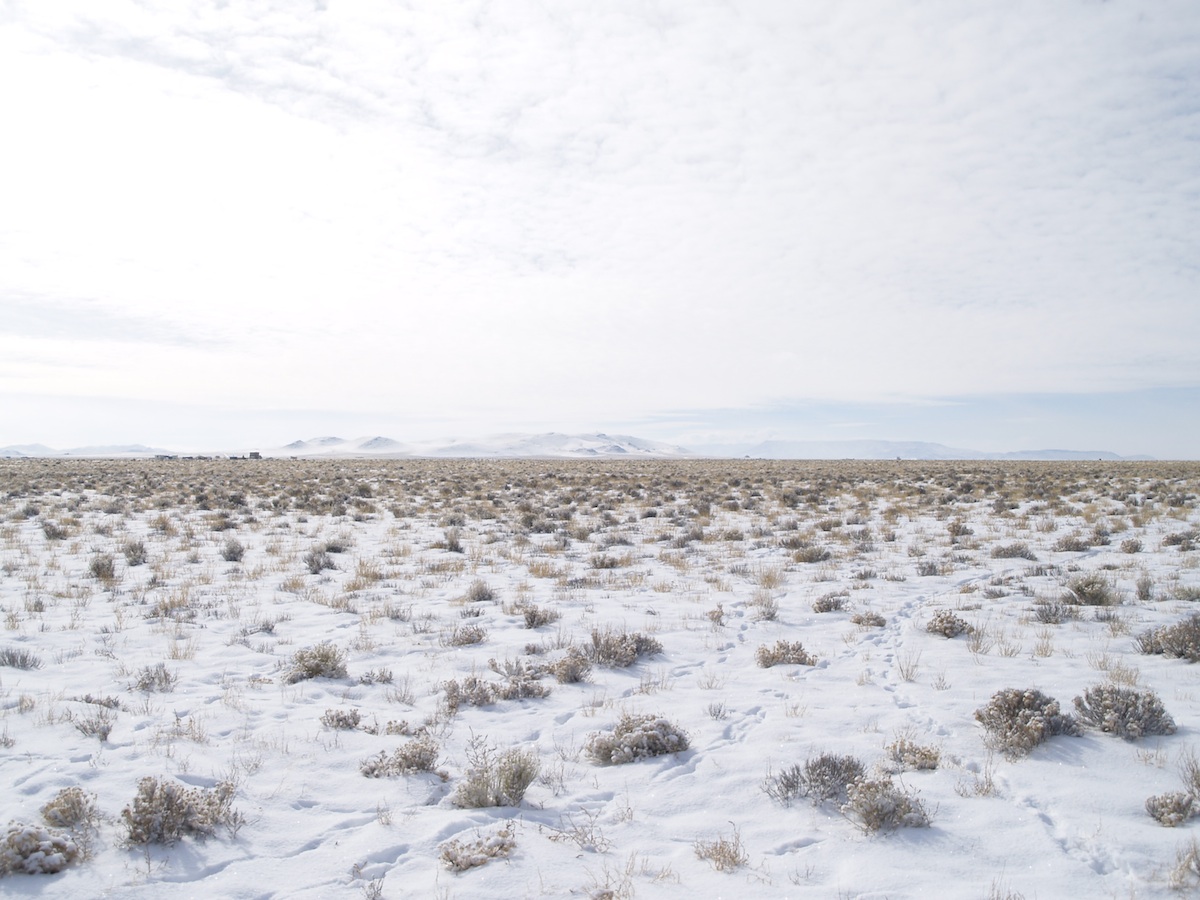
Locals who've been in the Valley for awhile say the snow hasn't been this deep east of Alamosa since the early 1990s. We got about a foot-and-a-half last week in Blanca Flats. Wind-sculpted banks lay over the furniture left by one of our neighbors. I explored the site with the dogs this afternoon and found an unoccupied sofa, a lonely silhouette of civilization against a wilderness of white. 

There was also (of course) a broken toilet peeking out of a snowdrift. Imagine using the commode in this hypothermic environment, meditating on the monochromatic hills . . . .

Sunday, March 31, 2013

Housecleaning


A new tribe of ants
carves tunnels in the sand --
time to clear the dust. 

Monday, March 18, 2013

When Nothing is There


These lines from a poem in Mary Oliver's recent collection reminded me why I love this place so much:
I go out
to the pale dunes, to look over
the empty spaces
of the wilderness. 
For something is there,
something is there when nothing is there but itself,
that is not there when anything else is. 
*   *   * 
from "Extending the Airport Runway"
in A Thousand Mornings
Mary Oliver, Penguin Press 2012 

From the perspective of a culture that revolves around cycles of building and manufacturing alternating with cycles of consuming and discarding, it does seem that there's nothing out here. It's not even a very good place for recreation. One of our "neighbors" set up a tent on their property the summer before last, apparently hoping to enjoy a little fishing and camping. They left the tent in place when they went home, and it quickly blew down, exposing the belongings they'd left to the sun, the wind and the scavengers who haunt Blanca Flats. When they returned a month or two later, they set up a pre-fab shed. The shed lasted for awhile before it finally gave in to the wind and fell apart.

Jake and Shelby have always loved to sniff around the remains of that place. There were apparently a couple of canine guests on the property at one time, and our dogs are either attracted to the scents they left behind or to the burned traces of a barbecue. When I walk with them down that road, I always have trouble dragging them away. A few days ago, just to see what the dogs found so enthralling, I went to explore the site.

There's nothing there now but a big hole in the ground, where the people have set up an impromptu landfill. A faded black sofa inhabits the landfill, along with the discarded toilet that seems to be an obligatory part of the landscape around here (there's one of those on our property, too, left by the previous owner). So this parcel of property has devolved from a campsite to a storage space to a dump.

Why do some people think that in landscapes like this, where nothing is there to appeal to the building/consuming mind, the only acceptable alternative is to use the land for waste disposal? It's more than just a practical decision, I think; it's an act of contempt, a gesture of resentment against a land that didn't welcome them on their own terms.

Tuesday, January 1, 2013

New Year with Ghosts


Each post emerges
like a separate gray soul
on the snowy road. 

On the last day of 2012, I went for a long run. A light snow fell. Milky banks of fog shifted across the landscape. Along the sides of the rutted roads, old fenceposts and signposts materialized one by one, like memories stepping forward from my subconscious. Beyond the border of the road, the horizon was a cloudy sea, marked by underwater dunes and mesas. In the distance, the Dome reminded me of the volcanic rock that rises out of Morro Bay in Northern California, where I spent so much of my life. 

I often miss the Pacific Ocean. But has it ever left me? Have any of the faces, seas or skylines I knew in the past really left me? I thought once again of how this ancient lakebed acts like a canvas for the imagination, how its shapes and sounds evoke remembered beauty or pain at every shift of the seasons, at every turn of the light. 

According to a Chinese superstition, ghosts of the past shouldn't be mentioned on New Year's Day. We should look forward to the future, focusing our thoughts on the coming months. But I don't fear these ghosts, or regret them anymore. I live with them comfortably now -- much more comfortably than I did when I was younger. I greet them like old companions on the road, like the old wooden corral posts that I've come to know so well. 

Friday, December 14, 2012

Wednesday, October 24, 2012

Tuesday, October 16, 2012

Gravel


Sifting damp gravel
over a red wheelbarrow
I smell last week's rain. 


This pile of gravel is our latest Sisyphean project; we have to sift through it to remove the dirt. I like big, apparently insurmountable projects like this. I spent over an hour shoveling and sifting today, burying my fingers in the damp soil as I spread the stones across the sieve that Eric made. He constructed the sieve by nailing a piece of mesh to an antique window frame. We sift the dirt out into the wheelbarrow, then haul the soil over to a ridge we're creating to defend our struggling flowerbed against rabbits. The gravel will fill the trenches that will form the foundation of the strawbale addition to the house. The addition is intended to be a mudroom, but it will also provide extra insulation against the winter wind.

I can't believe winter is on the way already. The sooner we fill up the trenches and finish the addition, the warmer we'll be when the winter winds start in earnest.

Sunday, October 7, 2012

Wednesday, October 3, 2012

Empty House


Abandoned A-frame,
between your shattered rafters
winged ghosts come to rest. 

This is one of the many empty dwellings here on Blanca Flats. "It's always the women who want to leave," our real estate agent told us when we bought our own A-frame about two miles from this one. "They miss their families; they miss the shops." This house was built for a family who lived here for awhile before the wife declared that she couldn't take the isolation. Behind the house is an old moving van that yawns open, as if the family stopped in the very process of moving their belongings into the house. Doves and pigeons have taken up residence in the van and in the house. If you walk around the property, which I've done before, the house seems to explode in an agitated whir of wings. 

Thursday, September 27, 2012

Saturday, September 22, 2012

Thursday, September 20, 2012

Dirt Road


Taking the dirt road
instead of the new highway
we cross paths with crows. 

When we first moved to Blanca Flats, I thought I'd never be able to deal with the three miles of rutted dirt that lead from Highway 160 to our house. I didn't know then that the roads are graded at least a couple of times a month by huge, dinosaur-like machines, making the washboard effect slightly less jarring. I also hadn't learned to appreciate the fact that the wind carves those ruts in the roads the way it leaves ripples on the surface of water. 

Highway 160 -- broad and freshly paved -- is relatively new. At one time, the primary route from the town of Blanca to Alamosa was a dirt road called Estrella. Estrella still exists, winding all the way to Alamosa (by far the largest city in the Valley, with a population of around 9,000). Estrella is still somewhat of a thoroughfare for locals who don't feel like dealing with the super-sized RVs or out-of-state drivers who are just passing through. 

I love driving around on the dirt roads now, admiring the self-built hybrid homes and trailer compounds. I love the road signs out stuck in the middle of nowhere, like some rural existentialist's idea of a joke. I love driving fast and sending up a long tail of dust when the road's just been graded. And I love the way the crows insist on sailing in front of my car at a stately pace, their black wings scissoring the air. 

Tuesday, September 18, 2012

Rosh Hashanah


September new year
a northeast wind pelts my cheek
with winter's sharp seeds. 

After a long string of balmy days, a slap of winter. Sunday the southwest wind coasted over the flats like a breeze caressing the ocean; Monday her northeastern sister took over and brought currents of bone-chilling cold. A rain laced with dust from the potato harvest spattered the windows all day as the wind beat at the roof. By afternoon the sun returned, and the clouds lifted to reveal a thick cloak of snow along the spine of the Culebra. 

Thursday, July 5, 2012

Monday, February 20, 2012

Morning Smoke


One skein of smoke

rising against brown hills,

solitary fire.


I suspect that living in a remote area encourages a morbid fascination with neighbors. I'm especially fascinated with the little settlement to the South of us, a collection of hybrid dwellings that appear to be uninhabited -- most of the time. But every now and then, I spot a tantalizing scrap of evidence of life. A plume of smoke on a frosty winter morning, a battered white truck pulling up to the settlement, an outdoor fire burning on a windy January evening. We've actually seen our neighbor walking around his property, and Eric met him once at the Polish convenience store in Blanca. In the evening, when I turn the solar panels to the East to catch the next sunrise, I look to the South to see if I can spot the lights on our neighbor's house. We're never really sure if he's there or not, or how he comes and goes, or what he does. But we are certain he exists. A neighbor's existence is always reassuring.

The second photo is not our neighbor's house; it's our front yard. The wooden structure once held a cistern that collected water from our well pump. I later filled it with tumbleweeds and left it in the yard, where I've unofficially declared it "land art." In Denver, this would violate about ten different zoning regulations.

Thursday, February 16, 2012

Friday, February 10, 2012

Widows


I know the wooden widows.

With their silvered backs to the mountain

they wait.


These posts mark the site of a ranch that has vanished. The stones that lined the foundation of the house still exist, but the walls have fallen away, and the barbed wire of the corrals is warped and rusted. These posts line the road that leads to the highway. On my early morning drive to work, I used to silently greet the posts, especially the one above, which I called "the Widow." I envied her unmoving solitude, her stoic stance against the hard Northern wind.

When I worked at a nursing home about 30 miles from here, one of the elderly residents told me that a rancher had hired him years ago to graze cattle out in Blanca Flats, but there wasn't enough vegetation for the livestock to eat. Ironically, the disappearance of edible vegetation and the thinness of the soil may be caused partly by the lack of grazing -- the symbiosis between livestock and the land has been broken. The land grows increasingly dry, the brush more sparse. The old irrigation ditches are parched seams, and the sheep trails have faded to gray threads. Space and silence are our bumper crops now.

Tuesday, February 7, 2012

Between Mesas

Clear twilight

fills the bowl

between two mesas,

a cup of water

for the weary heart.

I love the mesas in winter; the snow highlights their hollows and planes, revealing the crevices that aren't visible in the warmer months. I spent over an hour trying to find a phrase to describe the way the sky fills the space between these ancient formations, how the parabola between them seems to offer itself like an open bowl. A woman I know once said that God is space, and having lived out here for awhile, I believe she was right.


Monday, January 30, 2012

Iron Grass

Iron tufts of hair:

drought has hardened you,

wind gently combs you.


These gray grasses, toughened by sun and drought, embody what I love about this micro-environment. The metallic blades of these grass tufts will never see green again, but they'll be here for years, simply enduring. I love the colorless, indestructible presence of these plants, which are no longer living but are nevertheless still here. They are survivors of prolonged thirst and parched air, and like many survivors, there's a profound stillness about them. I imagine that even the harsh wind slows down to touch them gently.